
The liquidity in the banking system moved into surplus almost after three months as the Reserve Bank of India (RBI) absorbed over Rs 40,000 crore from the market on Monday, predominantly on the back of increased government spending. However, this situation may be short-lived given the higher demand for funds to pay taxes and year-end targets, treasury executives said. Meanwhile, two variable reverse repo rate (VRRR) auctions held on Tuesday received weak response.

Investors pumped in a record Rs 40,608 crore into equity mutual funds in June, 17 per cent higher than in May 2024, industry body Amfi said on Tuesday. The flows into the systematic investment plans (SIPs) also reached a new high at Rs 21,262 crore for the month, which was higher than the previous high of Rs 20,904 crore recorded in May, it said. The net assets under management (AUM) for the entire MF industry on equity schemes stood at Rs 27.67 lakh crore, while the same from SIPs was Rs 12.43 lakh crore, the body said.

India recorded a current account surplus of $5.7 billion or 0.6 per cent of GDP in the March quarter, the Reserve Bank of India said on Monday. This is the first time in ten quarters that the crucial metric of the country's external strength has turned into surplus mode. In the year-ago period, the current account deficit stood at $1.3 billion or 0.2 per cent of GDP, and the same was $8.7 billion or 1 per cent of GDP in the preceding quarter ending December 2023.

Banks reported muted treasury gains during April-June of FY25 (Q1FY25) following Reserve Bank of India's (RBI's) revised norms on investment portfolio effective from April 1, 2024, despite softening of government bond yields. "Banks have reported muted treasury gains during Q1 of FY25 despite softening of yields across the curve. "The main reason was change in the investment valuation and classification guidelines by the RBI.

Companies with contrasting financial ratios enjoy similar credit ratings; agencies say they look at many other metrics.

The oil industry experienced three upheavals between 1973 and 1991, which seem to be etched in the memory of the industry's decision makers. Naturally, at the sign of a new crisis, the decision makers like to dip into those tumultuous decades to find ways to deal with the new shock, in addition, of course, to expert reports and forecasts. So, the industry bigwigs turned the pages of history to get a peek into the future of oil price movements after Russia invaded Ukraine in 2022, Israel attacked Gaza in 2023, Iran-linked Houthi rebels pounded tankers crossing the Red Sea in support of Palestine the same year, and Iran rained missiles on Israel in 2024.

The new system is expected to give emphasis on various in-built credit enhancement structures.

Software major Wipro on Wednesday became the first entity to get the credit rating agency ICRA's highest category 'SVG1' rating for stakeholders value creation and governance practices.

After two years of a record low interest-rate regime, Indian corporate houses are experiencing a sharp and abrupt increase in funding costs. With the Reserve Bank of India last month making an unequivocal turn towards policy tightening amid high inflation, firms looking to tap the capital markets for funds are ending up shelling out more. The yield on the benchmark triple-A-rated corporate bonds maturing in three years has climbed 98 basis points (bps) since the policy rate hike in May. It was last at 7.47 per cent, Bloomberg data showed.

India plans to keep its fiscal deficit within 3.9% of GDP.

'In FY23, PV sales are expected to end the year at a record 3.8 million units, up 26 per cent. In FY24, however, the industry is expecting 5-7 per cent volume growth'

The growth of eight key infrastructure sectors slowed down to a 4-month low of 8.1 per cent in September 2023 against 8.3 per cent a year ago, according to the official data released on Tuesday. The growth rate in the output of refinery products, fertiliser, cement and electricity during the month under review has decelerated, while it was negative in the case of crude oil. The previous low was in May, when the growth rate of these sectors stood at 5.2 per cent.

The government on Thursday more than doubled the price of natural gas that is used to produce electricity, make fertilisers, turned into CNG and piped to household kitchens for cooking, on the back of a spike in global energy prices. The price of gas produced from old regulated fields, such as the nation's largest gas field of Bassein of ONGC, will rise to a record high of $6.10 per million British thermal unit (mmBtu) from the current $2.90 per mmBtu, according to the oil ministry's Petroleum Planning and Analysis Cell (PPAC). The new price, which is likely to result in a hike in CNG and piped cooking gas rates, will be for six months beginning April 1.

Retail inflation declined to a 25-month low of 4.25 per cent in May mainly on account of softening prices of food and fuel items, with experts saying that RBI is expected to hold interest rates steady in the current fiscal. This is the fourth straight month when retail inflation has declined and the third straight month of Consumer Price Index (CPI) based inflation remaining within the RBI's comfort zone of below 6 per cent. CPI-based inflation stood at 4.7 per cent in April and 7.04 per cent in May 2022.

As COVID-19 infections spike in the country resulting in restrictions in various states and impacting the fragile recovery, many economists are expecting RBI to delay the policy normalisation move, which is expected in the February review. The country has reported a single-day rise of 58,097 new Covid-19 cases as of Wednesday morning--the highest in around 199 days -- of which 2,135 are Omicron cases and later in the day, the first confirmed Omicron-related death has also been reported. Maharashtra recorded the maximum number of 653 Omicron cases followed by Delhi at 464, Kerala 185, Rajasthan 174, Gujarat 154 and Tamil Nadu 121 cases, taking the total tally of cases to 3,50,18,358.
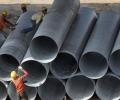
Strong demand in the domestic market, coupled with an increase in raw material prices, is pushing up steel prices. According to SteelMint, a market intelligence and price reporting firm, the list price of flat steel has seen an increase of Rs 750-2,000 per tonne for October deliveries. The long steel price witnessed an increase of Rs 1,500 per tonne towards the end of September.

The Monetary Policy Committee (MPC) is expected to maintain the status quo on policy rates for the fourth consecutive time in its October 4-6 review meeting. The incremental information available since its last meeting in August suggests that growth and inflation prints for the second quarter (Q2) of financial year 2023-24 (FY24) will exceed the committee's projections. However, the Consumer Price Index (CPI)-based inflation is expected to moderate in the second half (H2) of FY24.

Dubai World's troubles have begun to impact India. Icra, the rating agency, today downgraded its ranking on loans extended to DP World's (a transport and logistics arm of Dubai World) container terminals, at Chennai and Nhava Sheva (Navi Mumbai).

Retail inflation declined to a five-month low of 4.85 per cent in March mainly due to cooling food prices, inching towards the Reserve Bank's target of 4 per cent, according to official data released on Friday. The Consumer Price Index (CPI) based retail inflation was 5.09 per cent in February and 5.66 per cent in March 2023. Previously, CPI-based inflation was the lowest at 4.87 per cent in October 2023.

Retail inflation rose at the fastest pace in four months in December 2023 at 5.69 per cent, on account of an increase in prices of vegetables, pulses, and spices, according to government data released on Friday. The annual inflation based on Consumer Price Index (CPI) was at 5.55 per cent in November and 5.72 per cent in the year-ago month. As per the data released by the National Statistical Office (NSO), the rate of price rise in the food basket, which constitutes nearly half of the CPI, increased to 9.53 per cent in December 2023, as against 8.7 per cent in the preceding month, and 4.19 per cent in December 2022.

Reserve Bank of India (RBI) Governor Shaktikanta Das had stumped the market in the previous two policies - in August and in October - first with action and then with words. In August, it was the introduction of an incremental cash reserve ratio (I-CRR) to take out excess liquidity, which took the markets by surprise. In October, there was no action. Rather, what is known as "open mouth operation", Das' comment that the central bank might conduct open market operations (OMOs) by selling bonds tempered the euphoria in the bond markets after JP Morgan's inclusion of India in its Emerging Market Bond Index.

The Indian pharma industry is estimated to grow at 9-11 per cent in 2021-22 and in the next few quarters, it will be driven by domestic and emerging markets, according to ratings agency ICRA. In a sample of 21 Indian pharmaceutical companies, ICRA said revenue growth was moderate at 6.4 per cent in the second quarter of FY22, down from 16 per cent in the first quarter of 2021-22. The normalisation of the base and pricing pressures in the US market were the major reasons for slowing growth momentum in Q2 FY22, even as growth under domestic and emerging markets remained healthy, ICRA said in a statement.

Growth of eight key infrastructure sectors slowed down to 8.2 per cent in June 2023 compared to the year-ago month due to a decline in the production of crude oil, according to the official data released on Monday.
In a rating watch statement, ICRA said that it has re-affirmed the LAAA rating with a stable outlook on ICICI Bank's subordinated debt programme and long-term bonds programme, which indicate highest credit quality and lowest credit risk for the two instruments. Besides, the ratings for the debts taken over by ICICI Bank from the erstwhile ICICI Limited have also been retained at LAAA with stable outlook and MAAA, respectively.

The government has cut windfall gains tax on domestically-produced crude oil to nil while continuing the rate at zero on the export of diesel and ATF. The government has slashed the special additional excise duty (SAED) on crude oil produced by companies such as Oil and Natural Gas Corporation (ONGC) to nil from Rs 4,100 per tonne with effect from Tuesday, an official order dated May 15 said. This is the second time that the levy, which was introduced in July last year in the form of a cess to tax supernormal gains of oil producers and fuel exporters, has been cut to nil for domestically-produced oil.

The growth of eight key infrastructure sectors rose to a 14-month high of 12.1 per cent in August 2023 against 4.2 per cent a year ago, mainly due to expansion in production of coal, crude oil, and natural gas, according to the official data released on Friday. The expansion in August is the highest since June 2022, when it was 13.2 per cent. The production of refinery products, steel, cement and electricity also grew in August, the data showed.

Over the past several months, the airline has struggled to pay vendors and staff salaries on time.

Retail inflation declined to a three-month low of 5.1 per cent in January, mainly due to subdued prices of vegetables, fruits and other food items, according to government data released on Monday. The fall indicates that retail inflation is inching towards the Reserve Bank's comfort level of 4 per cent. The Consumer Price Index (CPI) based inflation was on the rise for two straight months after touching a trough of 4.9 per cent in October 2023. In December, it stood at 5.69 per cent.

With the first quarter gross tax mop-up reaching Rs 5.6 lakh crore, Icra Ratings on Friday said the government is set to exceed the budgeted tax collection target of Rs 22.2 lakh crore for 2021-22, led by indirect taxes. The government has budgeted a modest 9.5 per cent growth in tax collections at Rs 22.2 lakh crore for FY22, over FY21 collections of Rs 20.2 lakh crore. However, despite the second wave of the pandemic, the April-June quarter tax collections rose to Rs 5.6 lakh crore, which is 39 per cent higher than Q1 of FY20.
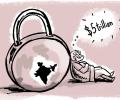
India decisively withstood global headwinds in 2023 and is likely to remain as the world's fastest-growing major economy on the back of growing demand, moderate inflation, stable interest rate regime and robust foreign exchange reserves. Despite widespread pessimism witnessed among the developed nations and the worsening geopolitical situation, India recorded a gross domestic product (GDP) expansion of 6.1 per cent in the March quarter. The growth moved up to 7.8 per cent in the June quarter and was 7.6 per cent in the September quarter. For the first six months of this fiscal, the growth was 7.7 per cent.

CRAs are getting more business than they were getting a year ago. This could indicate expectations that investment demand will rise in the mid-term, says Devangshu Datta.

The repo rate could be reduced by 50 bps in the current year.

India's industrial production growth slowed to 3.8 per cent in December 2023, mainly due to poor performance of mining and power generation segments, according to official data released on Monday. The factory output growth measured in terms of the Index of Industrial Production (IIP) was at 5.1 per cent in December 2022. In November last year, IIP growth stood at 2.4 per cent.

During the fourth quarter (January-March), banks step up the activity to meet annual targets. This leads to a race to raise funds from markets often by jacking up deposit rates. This time around, the market has not seen such trend yet.
Retail inflation declined to an 18-month low of 4.7 per cent in April mainly due to falling prices of vegetables, oils and fats, and came closer to Reserve Bank's target of 4 per cent, showed government data released Friday. It was for the second month in a row that Consumer Price Index (CPI) based inflation remained within the RBI's comfort zone of below 6 per cent. The government has tasked the central bank to ensure retail inflation remains at 4 per cent with a margin of 2 per cent on either side.

Domestic air passenger traffic remained 44 per cent lower in the April-December 2021 against the corresponding period of FY20, but saw a jump of 52 per cent year-on-year to 111 lakh in December 2021, according to rating agency ICRA. The total domestic passenger traffic had stood at 73 lakh in December 2020, according to a report by the rating agency. It also said that the emergence of new coronavirus variant and reactionary restrictions impacting air travel remain near term-challenges for the airline industry.

24x7 power supply to farmers emerges as a political lightning rod in the state.

Ratings agency ICRA on Wednesday revised downwards growth forecast for the domestic passenger vehicles industry to 8-11 per cent in the ongoing fiscal from the earlier estimate of 14-17 per cent on account of the ongoing semiconductor shortage. Similarly, for the two-wheeler segment, it said the volumes are expected to contract by 1-4 per cent in FY2022 against an earlier prediction of 6-8 per cent growth as affordability and demand sentiments of target clientele was hit sharply by the second wave of COVID-19 pandemic. With around 5 lakh units of production lost by various automakers in the passenger vehicles segment due to the semiconductor shortage, ICRA said the earnings loss for the OEMs (Original Equipment Manufacturers) could be around Rs 1,800 crore to Rs 2,000 crore for the ongoing fiscal.
